
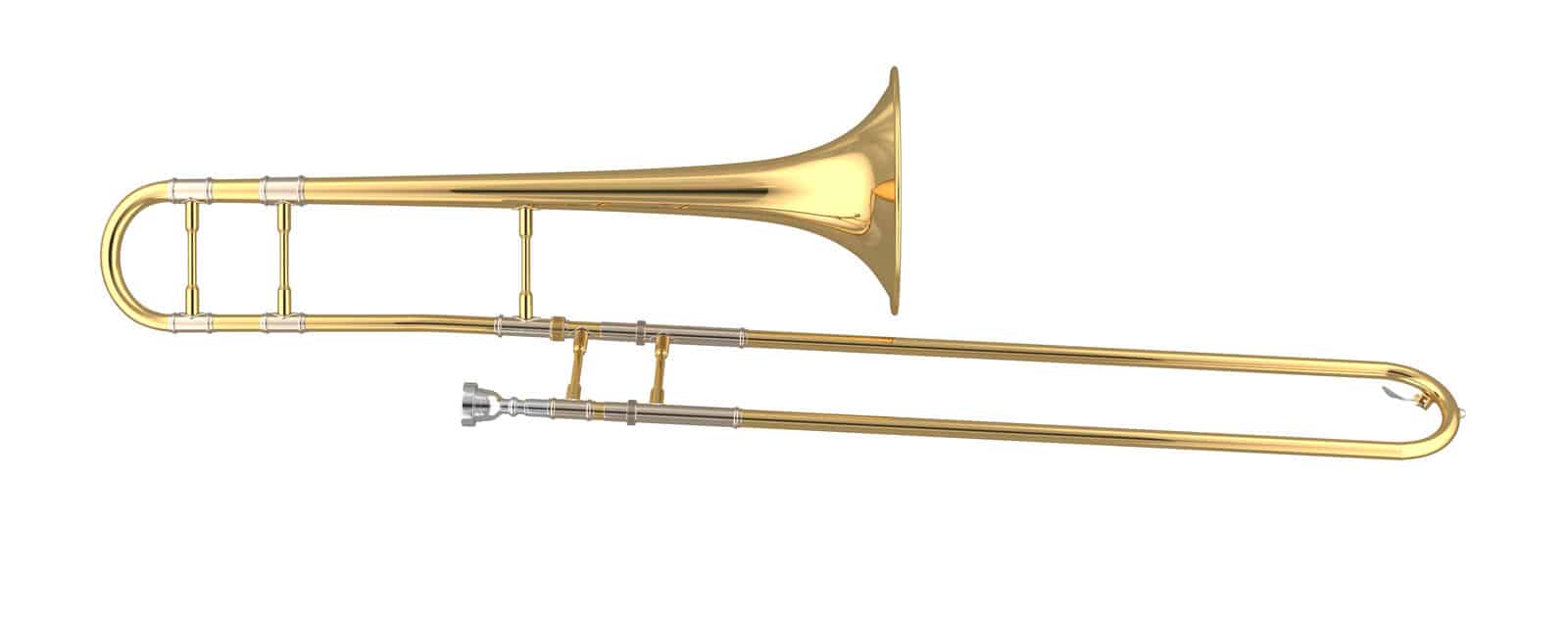
There are 3 main types of trombones in regular use today, plus a number of rarer variants. Let's explore them all.
Trombón tenor
El tipo de trombón más común es el trombón tenor. El trombón tenor es el trombón que verás en manos de los músicos de la sección de trombones de una banda. Tiene un sonido profundo y completo.
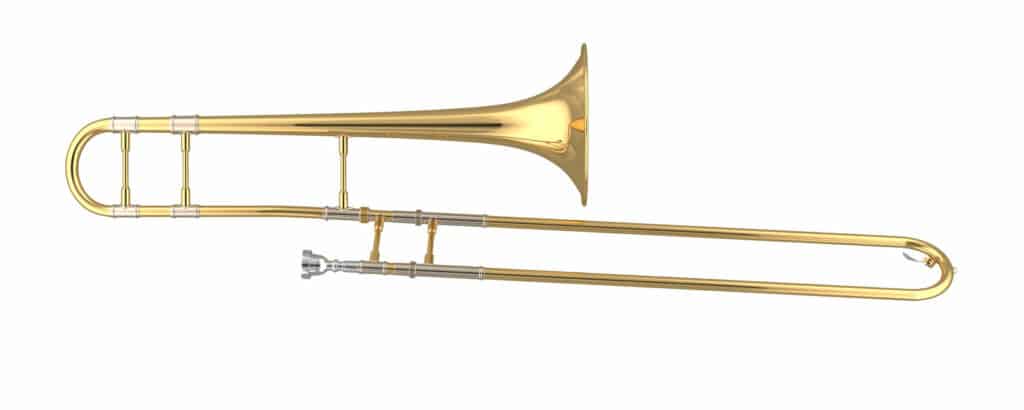
En su forma más simple se le llama trombón recto, lo que significa "sin accesorio de Fa".
El trombón tenor está afinado en Sib y las partituras deben estar escritas en clave de Fa.. Los músicos avanzados también deberían poder leer la clave de tenor, pero la clave de fa es, con mucho, la más utilizada.
Los trombones tenor a menudo vienen con un gatillo, o accesorio en F, que añade tubería adicional al instrumento y cambia la afinación de Sib a Fa.
Trombón bajo
The bass trombone has a larger bore than the tenor and usually has an F-attachment (valve) and a secondary valve to extend the low-end even more. The second valve lowers the tuning to Gb, or (less common), to G.
The bass trombone is pitched in Bb and has the same length of tubing as the tenor trombone. It has a larger bore, a larger bell, and a larger mouthpiece though.
Trombón alto
The alto trombone is pitched in Eb and is less common than tenor and bass trombones. There is orchestral music scored for alto trombone, but professional players comfortable playing the alto are few. It is common to use alto trombones in music schools for smaller kids as they are unable to reach the outer positions of a tenor trombone before a certain age.
Otros tipos de trombones
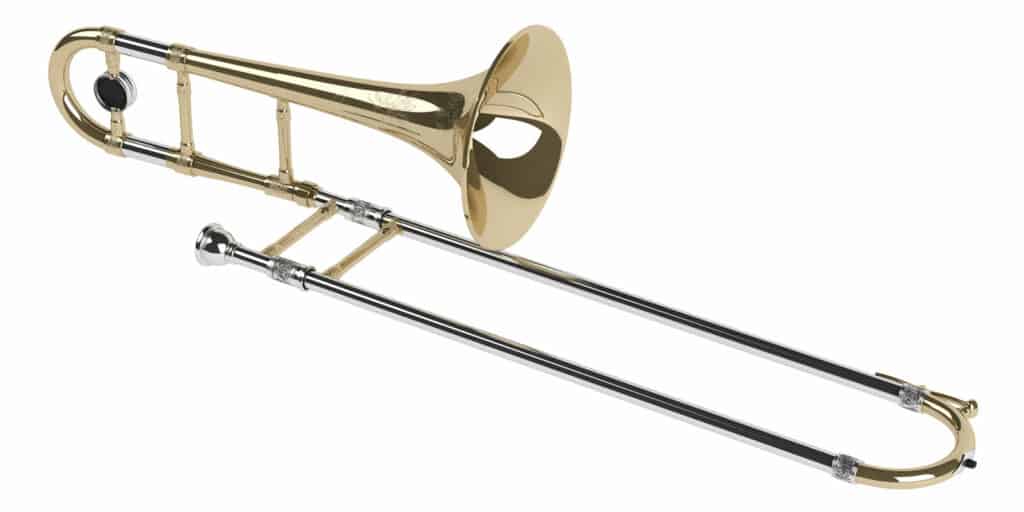
Hay una gran variedad de trombones que rara vez se utilizan. Algunos de ellos son:
Soprano trombone — Pitched in Bb an octave above the tenor, the soprano trombone resembles a miniature slide trombone. It is more commonly played by trumpet players due to the similar mouthpiece size, and is mainly found in trombone choirs.
Sopranino trombone — Even smaller and higher than the soprano, the sopranino is pitched in Eb or F and is extremely rare. It is occasionally used in trombone choir settings.
Superbone — A hybrid instrument featuring both a slide and three valves, made famous by Maynard Ferguson. It offers the technical flexibility of both mechanisms.
Trombón de válvulas — Uses three rotary or piston valves instead of a slide, similar to a trumpet. This allows faster note changes and is popular in Latin, folk, and marching band music.
Sacabuche — The historical ancestor of the modern trombone, used from the 15th to 17th centuries. It has a narrower bore and a less flared bell, giving it a softer, more blended sound. Today it is played by period performance specialists.
Cimbasso — A low brass instrument used primarily in opera orchestras (especially Verdi). Most commonly pitched in F, it uses three to six valves and has a predominantly cylindrical bore.
Contrabass trombone — The largest and lowest member of the trombone family, pitched in F a fourth below the bass trombone. It is used in large orchestral works and opera, and bass trombonists in professional orchestras are often expected to double on it.


