
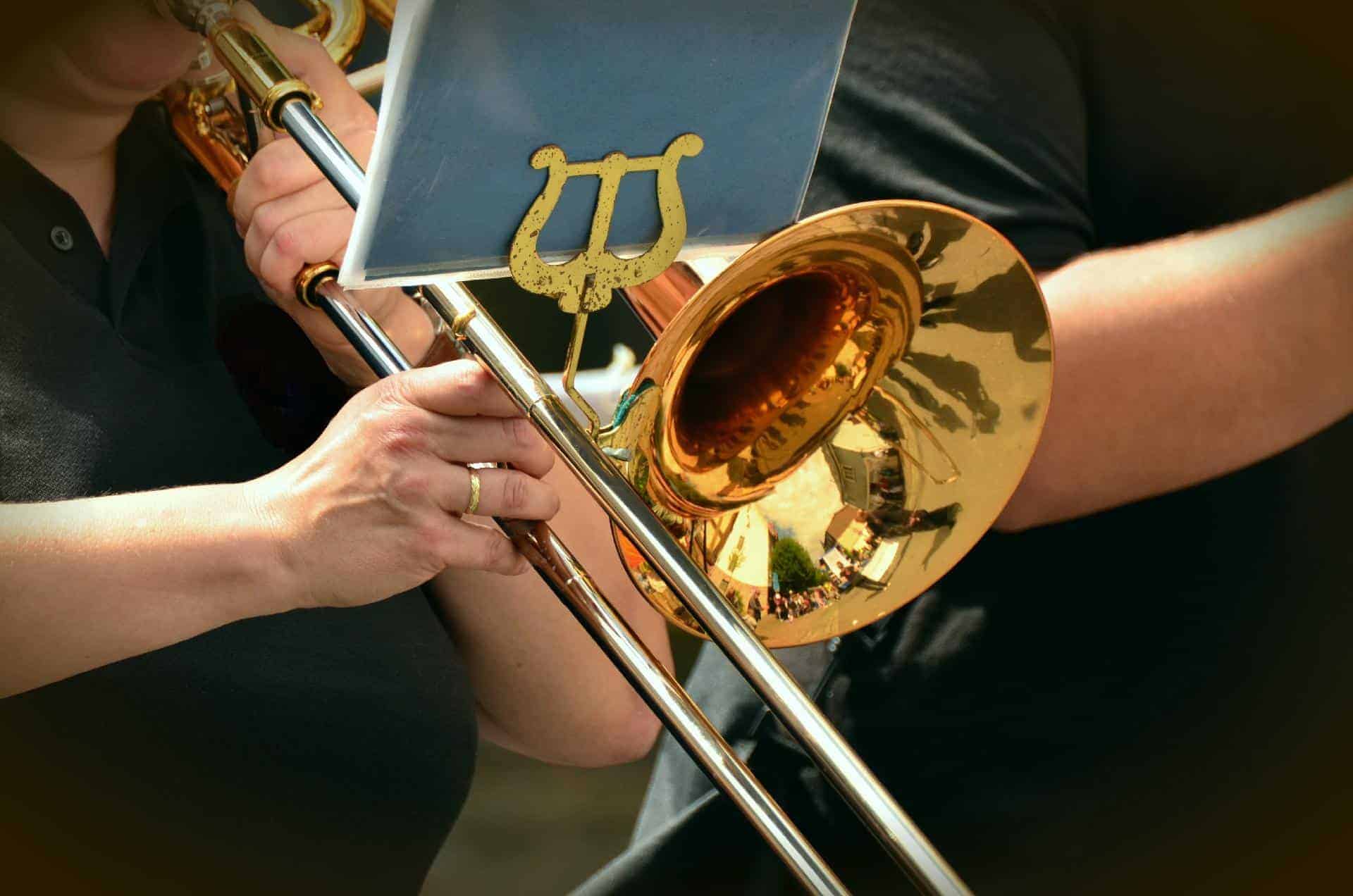
Playing the trombone is a lot different from playing most other instruments. It is the only brass instrument that doesn't have valves. Instead, you use the slide to alter the length of the tubing.
Trombone Position Chart
The trombone reads music in concert pitch using bass clef, with no transposition needed. While bass clef is most common, trombonists may encounter tenor, alto, and treble clefs as they advance, particularly in orchestral music. Learn more about keys and clefs here.
The number under the staff indicates slide position:
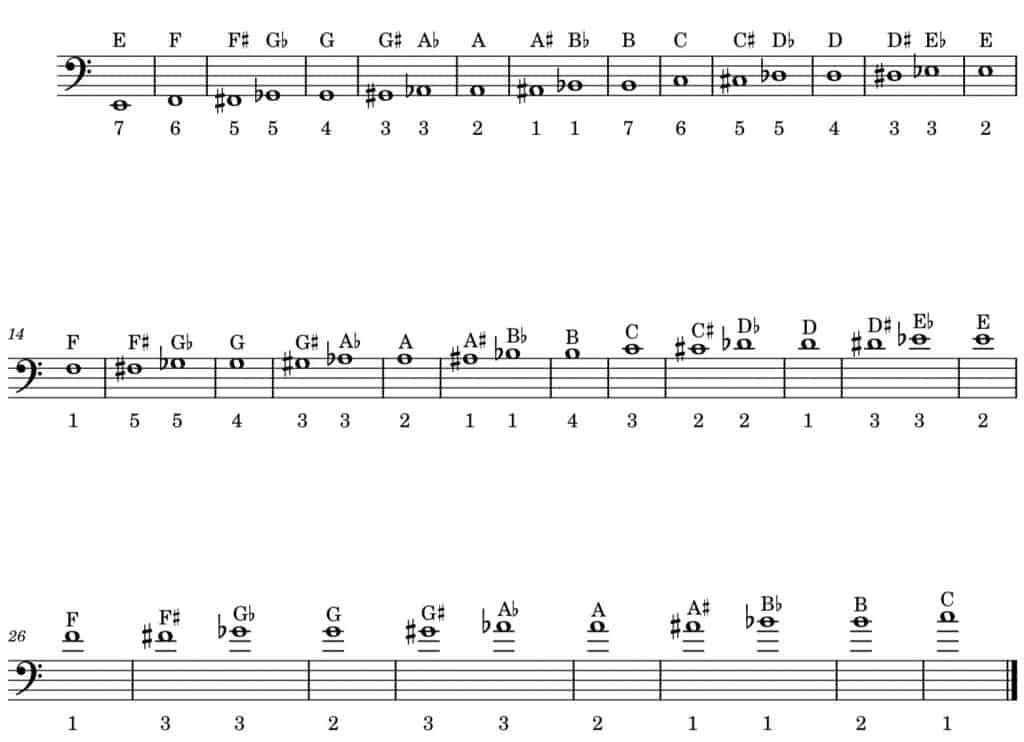
Slide position chart
Basic notes in each partial. Notes in parentheses are considered alternative Positionen.

Where are the trombone slide positions?
There are a total of 7 basic positions on a trombone, each a semi-tone apart.
The slide chart below will give you a visual reference of how to position the slide.

Olek Remesz (wiki-pl: Orem, commons: Orem), CC BY-SA 3.0 <http://creativecommons.org/licenses/by-sa/3.0/>, via Wikimedia Commons (edited by Kevin Christensen)
- 1st position: Almost all the way in.
- 2nd position: Between 1 and 3
- 3rd position 3: Just before the bell
- 4th position: Slide lined up with the bell
- 5th position: No-one knows 🙂 between 4 and 6.
- 6th position: Just before the stockings
- 7th position: Just before the slide falls off.
Use it as a visual guide but remember to use your ears. Depending on the note you are trying to play and your particular instrument you will have to make small adjustments.
Practice with a piano, or, if you don't have a piano or keyboard, use an online "piano" like this or an app on your phone.
What is embouchure?
Embouchure is the word used to describe the facial muscles used to play brass instruments. It is a French word that roughly translates as "mouth embrace". To play any brass instrument, your embouchure must be strong and in control.
Simply put, the embouchure is how you position your lips on the mouthpiece to get a particular sound.
By tightening or loosening your embouchure you can play the full range of the instrument.
In effect, you can play a whole range of notes in any given slide position.
Parts of the trombone
To get us up to speed here's a picture of a trombone:
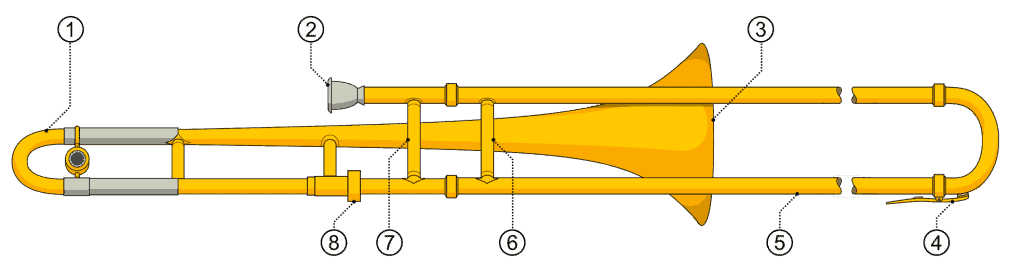
Olek Remesz (wiki-pl: Orem, commons: Orem), CC BY-SA 3.0 <http://creativecommons.org/licenses/by-sa/3.0/>, via Wikimedia Commons
- tuning slide
- mouthpiece
- bell
- water key
- main slide
- second slide brace
- first slide brace
- slide lock ring


